
Multimeter Uses: Essential Functions Explained
A typical multimeter can read voltage levels up to 20V. Yet many projects, especially in innovation and electronics, use less than 200mA of current. This contrast highlights how important multimeters are for electrical testing and troubleshooting tasks. Understanding how to operate a cen tech digital multimeter price is important for technicians, engineers, and students learning electrical concepts.
Thanks to their versatility, multimeters provide precise measurements of voltage, current, and resistance. This article will explore the many roles and functions of a multimeter. By the end, you should have the knowledge needed to use this important tool effectively in your electrical work.
Key Takeaways
- Multimeters are key instruments for measuring voltage, current, and resistance.
- Understanding multimeter applications is crucial for effective troubleshooting.
- Digital multimeters are popular for their clarity and precision in readings.
- Safety precautions are essential when using a multimeter for electrical testing.
- Continuity testing is a key function for verifying electrical connections.
- Selecting the right multimeter can significantly impact your testing efficiency.
Introduction To Using Multimeters
A multimeter is indispensable for diagnosing electrical problems and ensuring devices work correctly. By measuring different electrical quantities, it serves both experienced technicians and DIY enthusiasts.
What is a Multimeter?
A multimeter is a combined instrument designed to measure voltage, current, and resistance. This combination is very helpful for diagnosing and fixing electrical problems. Multimeters come in both analog and digital forms, and both types are important. With analog multimeters, a needle moves across a scale; digital versions present readings on a screen. You can use them to check wall receptacles, batteries, and various electronic components.
When it comes to electrical testing, the multimeter plays a central role. It checks circuit integrity and identifies issues in various environments. For instance, in the auto industry, it examines battery voltage and sensors. It also helps keep industrial machinery running correctly, reducing the risk of costly breakdowns.
Multimeters, vital for testing, assess AC and DC voltage, current, and resistance. Because they handle so many tasks, they are invaluable for simple DIY work and more complex projects.
Types of Multimeters
Grasping the main multimeter types helps you carry out electrical testing more successfully. They fall into two main categories: analog and digital multimeters. Each type provides its own set of features and advantages. So, choosing the best type depends on your needs and personal preferences.
Analog Multimeters
Analog multimeters feature a needle pointer and dial display. They are excellent when you need to observe rapidly changing signals. Their design lets users see changes as they happen. Analog devices boast a sensitivity range typically between 1,000 to 50,000 ohms per volt, with the peak sensitivity reaching up to 20,000 Ω/V. This characteristic made them a favorite among radio technicians in the mid-20th century.
Digital Multimeters
Because they combine precision with useful features, digital multimeters are now widely preferred. Their LCDs present measurements clearly and can show up to four digits. They are capable of measuring different parameters such as voltage, resistance, and temperature. Furthermore, high-end models offer auto-ranging, data logging, and wireless capabilities. As a result, they are ideal for demanding tasks in areas like car diagnostics and renewable power setups.
Comparing Analog And Digital Multimeters
Deciding whether to buy an analog or digital multimeter comes down to what you need and how much you want to spend. The following table highlights their main differences:
| Key Feature | Analog Multimeters | Digital Multimeters |
|---|---|---|
| Display | Moving needle on a dial | Numeric display (LCD) |
| Measurement Accuracy | Reasonable but generally less precise | High precision and resolution |
| Response Time | Responds quickly to changing values | Response speed depends on sampling rate |
| Applications | Ideal for viewing rapidly changing readings | Versatile, used across various industries |
| Cost | Generally lower | Can cost more, depending on features |
Both types are valuable for electrical testing, but digital multimeters have become more popular thanks to their precision and capabilities among hobbyists and professionals.
Understanding Multimeter Components
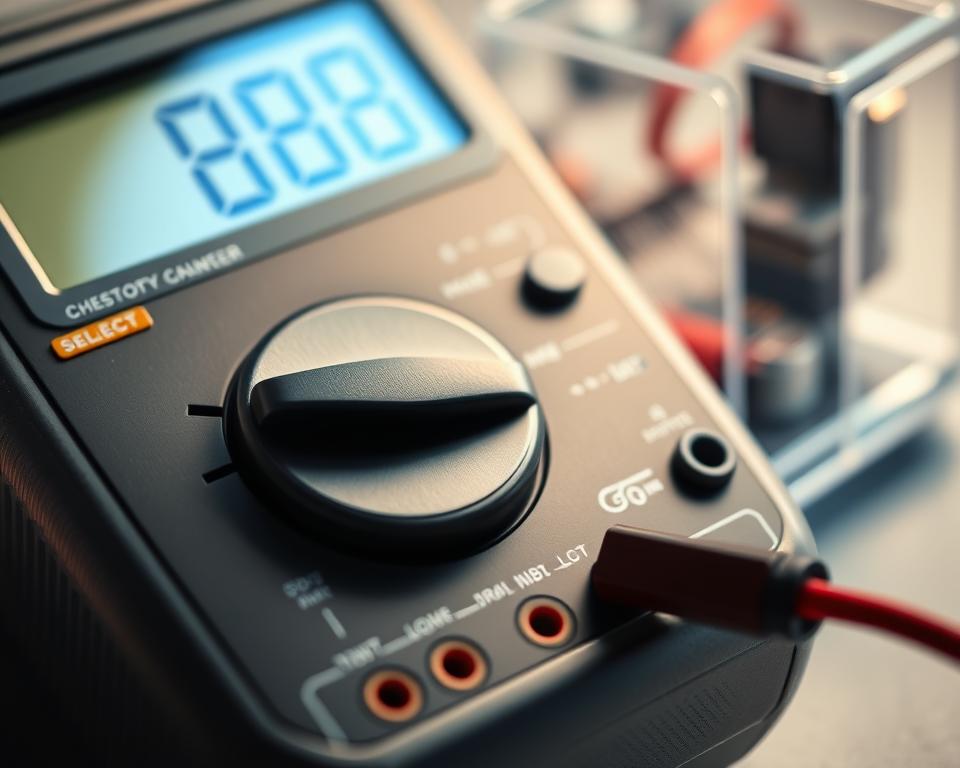
Grasping the key elements of a multimeter is vital for its effective use. It comprises several main components, each with a distinct role. The display shows the measurement values, and the selection knob allows you to switch between voltage, current, and resistance modes. The probes, which link the meter to the circuit you are testing, are also a critical feature.
Key Parts and Their Functions
You can break the important parts of a multimeter into these sections:
- Display Panel: Shows measurement results in real-time for easy data interpretation.
- Selection Knob – Enables the user to switch between different measurement functions like voltage, current, and resistance.
- Ports – Usually three, but some models have four, for connecting various probes.
- Test Probes – Vital for linking the multimeter to electric circuits, with red for positive and black for ground connections.
How Multimeter Probes Work
The probes are critical to the way a multimeter operates. You can get different styles of probes, like standard tips or alligator clips. The red probe usually connects to the measurement port, while the black probe serves as the common or ground. Using alligator clips simplifies tasks involving several components, improving measurement precision and efficiency.
How The Selector Knob Works
The function selector knob is the main control for switching between measurement modes. Twisting the knob, users can shift between AC and DC voltage measurements, current checking, or resistance testing. To get reliable results, you must always choose the proper setting. Users must exercise caution with the range setting to prevent device damage or inaccurate results.
Anyone dealing with electrical testing needs to know the functions of a multimeter. These devices provide essential measurements for accurately evaluating electrical components. They measure voltage, test current, and check resistance, making them vital for both professional use and DIY projects.
How To Measure AC And DC Voltage
One of the primary roles of a multimeter is measuring AC and DC voltage. These instruments provide accurate measurements and can pick up subtle variations in voltage levels. Such accuracy helps confirm that devices operate safely within their specified voltage limits.
Testing Current Measurement
Measuring the flow of current in both AC and DC circuits is another important function of multimeters. By measuring current, you can ensure components run safely and efficiently, which is vital in automotive diagnostics and industrial upkeep.
Understanding Resistance Measurement
To check the condition of components such as resistors, you use the resistance measurement feature. With measurement ranges extending into megaohms, multimeters are ideal for evaluating circuit integrity and running continuity tests.
Continuity Testing Features
Continuity testing is a crucial function when troubleshooting circuits. It typically relies on a tone or a visual icon to confirm that a connection exists. This helps ensure that circuits function as intended, aiding in efficient troubleshooting.
| Key Function | What It Does | Application |
|---|---|---|
| Measuring Voltage | Checks both AC and DC voltage with precise readings. | Evaluating power supply in devices. |
| Measuring Current | Measures how much current is flowing through a circuit. | Checking battery voltage and sensor functionality. |
| Measuring Resistance | Tests the functionality of circuit components. | Confirming that resistors, diodes, and similar parts stay within their specified tolerances. |
| Testing Continuity | Checks for electrical connections. | Troubleshooting circuit integrity. |
How To Use A Multimeter Safely And Effectively
Knowing how to properly use a multimeter is essential when dealing with electrical systems. Following the correct procedures helps maintain safety and ensures accurate readings. When measuring voltage, current, or resistance, each step requires certain precautions.
Basic Safety Precautions
You should always understand the basic safety precautions before using a multimeter. You must ensure your multimeter has the correct safety rating for the environment in which you are working. Sadly, over 30% of electricians use inadequately rated tools, risking danger. To stay safe, you should verify the multimeter settings before you attach the test leads.
You should never touch live conductors, especially when checking current, as this can cause shock. For circuits above 50 volts, wearing proper personal protective equipment (PPE) is essential.
Steps for Measuring Voltage
Voltage measurement requires careful attention to detail. First, choose the correct multimeter range for the voltage, AC or DC. Then, plug the probes into the common port and the voltage measurement port. After that, connect the probes carefully across the points you want to test.
Seeing 0 volts when testing from ground to neutral might show a wiring problem, highlighting multimeter safety importance.
Steps for Measuring Current
Measuring current is a bit more complex than measuring voltage. You have to break the circuit and insert the multimeter in series at the measurement point. Select the proper current range on the meter, either in amps or milliamps depending on the expected value. Then connect the probes firmly between the two open ends of the circuit.
Be alert for any warning signs or unexpectedly high readings, particularly if the measured value is above about 30V.
Steps for Testing Resistance
To accurately test resistance, disconnect the component in question. Switch the multimeter to resistance mode, then connect the probes to the component. A matching reading means the component works well; otherwise, it might be defective. This safety consideration helps avoid multimeter damage and ensures correct electrical flow analysis.
Common Applications of Multimeters
In both professional environments and home use, multimeters are indispensable for many tasks. They excel at troubleshooting electrical circuits, which makes them extremely valuable. These devices are key in spotting and fixing electrical problems, ensuring systems work as they should.
Troubleshooting Electrical Issues
Multimeters primarily help in diagnosing electrical circuit issues. Professionals and hobbyists alike use them to identify where a fault is occurring. By measuring voltage, current, and resistance, they identify faulty parts, ensuring safe and efficient operation.
Testing Batteries And Power Supplies
Multimeters are frequently used for checking the condition of batteries. They measure voltage to assess automotive or household battery charge status. It enables you to see whether a battery is usable or should be replaced, supporting smarter energy use.
Verifying Circuit Integrity
Checking circuit integrity is essential for both safety and performance. Multimeters assess this by measuring continuity and resistance. They detect issues like broken wires or defects, prompting timely fixes. Overall, multimeters improve installation safety and make troubleshooting easier.
How To Choose The Best Multimeter For You
Selecting the right multimeter can greatly improve your efficiency in electrical testing. You should consider accuracy, measurement ranges, portability, and how user-friendly the meter is. Unlike analog meters, digital multimeters excel in functionality, favored by technicians and hobbyists.
Factors to Consider
Essential factors in selecting a multimeter include:
- Accuracy: Digital multimeters provide high precision, detecting changes down to 1 millivolt.
- Measurement Ranges: Choose a meter that can measure different ranges of voltage, current, and resistance.
- Portability – A smaller, easy-to-carry multimeter is helpful when you need to travel or work on site.
- Usability: Features such as auto-ranging and a backlit display improve usability.
Popular Models: Cen-Tech 7 Function Digital Multimeter
One well-known option is the Cen-Tech 7 Function Digital Multimeter, which combines versatility with a modest price. It brings together vital features appealing to both beginners and experts. Additionally, its auto-ranging function simplifies measurements, streamlining task execution.
With a count capacity of up to 20,000, it delivers precise readings across a wide range of electrical tasks. It performs especially well in troubleshooting circuits, automotive diagnostics, and testing batteries. Because it combines useful features with simple operation, the Cen-Tech 7 Function Digital Multimeter is a strong choice when you are investing in a meter.
Conclusion
Understanding how a multimeter works is crucial for anyone performing electrical tasks. This overview has outlined the roles multimeters play, especially in testing and maintaining safety. The precision they offer in measuring voltage, current, and resistance makes them indispensable. Therefore, multimeters are important tools for both professionals and hobbyists.
Multimeters offer more than just basic measurements. Some units add advanced functions, including data logging and wireless communication. With these features, you can use multimeters in many areas, including vehicle diagnostics and renewable energy systems. Continuity and frequency testing functions further aid in locating faults so systems can run reliably.
Armed with this insight, individuals can adeptly use their multimeter proficiency for precise troubleshooting and enhancing safety measures. You can also improve the efficiency of electrical installations and maintenance work. Overall, the flexibility of multimeters makes them indispensable for achieving precise, reliable electrical results.
FAQ
What Are The Main Functions Of A Multimeter?
A multimeter’s primary roles include measuring AC/DC voltage, current, and resistance. It can also perform continuity checks. These functions are vital for finding electrical problems and checking circuit health.
How do I choose between an analog and a digital multimeter?
Choosing between analog and digital multimeters depends on your needs. Analog meters work well for observing quickly changing values. Digital multimeters, by contrast, offer precise numeric displays. Because of this, many people choose digital meters for their day-to-day work.
What Safety Steps Should I Follow When Using A Multimeter?
When using a multimeter, always select the correct setting before connecting. Never touch bare live conductors during current measurements. Additionally, remove components from live circuits before checking resistance so you get accurate results.
Can a multimeter test batteries?
Absolutely, multimeters are often used to test batteries. They measure voltage to show charge level. This helps confirm that your power sources are reliable for different applications.
Why Is Continuity Testing Important And What Does It Do?
Continuity testing uses a multimeter to confirm that an electrical path is complete in a circuit. It’s crucial for finding and fixing breaks. This ensures your electrical setups work correctly.
What Components Are Typically Found In A Multimeter?
A multimeter typically includes a reading display, a function selector knob, probe ports, and the probes. These probes are used to connect the meter to the points in the circuit you want to measure.
How Does The Cen-Tech 7 Function Digital Multimeter Compare To Other Options?
This Cen-Tech model is straightforward to operate and provides versatile features, including auto-ranging. Its affordable price makes it an attractive choice for both professionals and hobby users.