
Complete Guide To Flaring 3/8 Copper Tubing
Surprisingly, over 40% of leaks in HVAC work can be traced back to bad flare joints instead of faulty fittings. The good news is that correct flaring technique can completely prevent these problems. This guide is designed to show you how to correctly flare 3/8 copper tubing so your connections stay reliable and easy to service.
In plumbing and HVAC work, 3/8″ OD copper is common, and this guide compares flare joints with soldering and brazing methods. We’ll also cover why flare to compression adapter and 3/8 flare to 3/8 compression adapters are frequently the preferred option. This article is written for DIYers, plumbers, and HVAC techs in the United States, providing practical, code-compliant steps for making flare joints in copper tubing.
This concise guide walks you through the copper tubing flaring process step by step, covering the necessary tools, materials, and standards, such as SAE J533, along with references to NFPA 54/ANSI Z223.1. You’ll see a clear procedure, troubleshooting pointers, and buying sources such as Installation Parts Supply for wholesale fittings and tools.
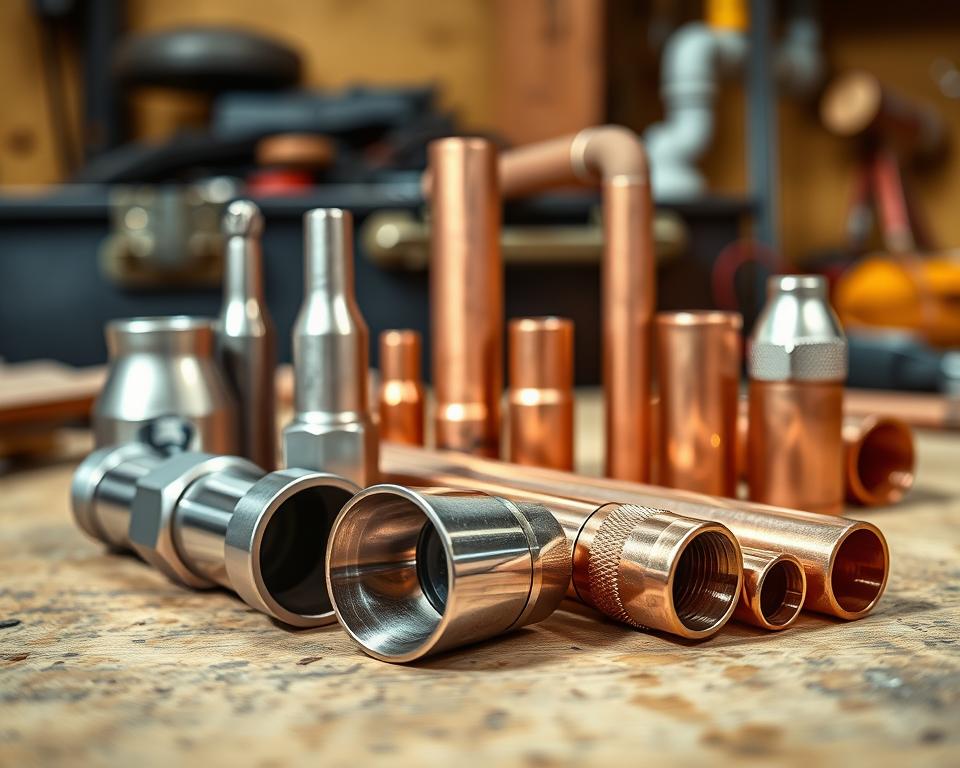
- Knowing How To Flare 3/8 Copper Tubing is vital for making removable, flame-free connections in numerous HVAC and plumbing applications.
- Use the correct 3/8 copper tubing flare fittings and approved brass parts to meet code and avoid corrosion.
- A step by step copper tubing flaring guide reduces leaks: cutting square, deburring, and forming a 45° flare are critical.
- Be sure you know when flare joints are better than solder or braze joints, particularly for serviceable runs or gas piping.
- Consult SAE J533 and verify with the AHJ under NFPA 54/ANSI Z223.1 before you finalize installation.
Importance of Flaring 3/8 Copper Tubing for Plumbing & HVAC
When soldering isn’t practical, flaring 3/8 copper tubing provides a dependable sealing method. It lets you work without open flames, which improves safety on the job. Using flares can also speed up repairs and equipment replacement.
When to use flare joints instead of soldering or brazing
Opt for flare joints in environments where using a flame is risky, such as near finished interiors or combustible substances. Flare connections offer a reliable yet detachable link for appliances and service lines. As a result, flares are a strong alternative to solder or braze joints on thinner tube.
Common Applications: Water, Gas, Refrigeration, HVAC
Flared connections are commonly used in water service, including meter and main tie-ins, and refrigeration service lines. They’re also found in appliance feeds like ice makers. Single 45° flares meet code requirements in fuel gas systems for propane and natural gas, facilitating small-diameter tubing connections. Flares are frequently paired with adapters—like a 3/8 flare to 3/8 compression adapter—to transition between fitting types.
NFPA 54/ANSI Z223.1, Code Checks, and Safety
NFPA 54/ANSI Z223.1, the National Fuel Gas Code, allows 45° flared brass fittings in gas service applications. Even so, always check with your local authority for any additional rules before starting. Employing approved brass fittings minimizes corrosion, and adhering to copper tubing flare joint guidelines ensures lawful assemblies.
Advantages of flare connections: no open flame, removable joints, field serviceability
Flaring lets you avoid torches in dangerous or tight areas, resulting in safer working conditions. These joints form consistent, detachable connections that simplify access for repair and maintenance. In retrofit and field-service situations, using 3/8 copper tubing with flare connections speeds repairs and reduces interruptions.
Process Overview: How To Flare 3/8 Copper Tubing
Begin flaring 3/8 copper tubing by selecting the appropriate tube. It’s important to understand the standards that apply to the joint. Opt for malleable tubing whenever feasible. Make sure you follow the 45° flare requirement to achieve a leak-free connection with approved brass fittings.
Type K and soft-temper, annealed copper are optimal for flaring. They bend and form easily without cracking. Meanwhile, Type L can also be flared if its end is annealed first. However, hard-temper or Type M tubing is typically used for soldering or brazing unless you first anneal the section to be flared.
Flare Angle Requirements and Standards
For 3/8″ tubing, a 45° single flare is necessary, complying with SAE J533 specifications. Use a flaring tool that’s built for 3/8 OD copper. This tool must create an accurate 45° cone. Precise angle control ensures successful copper tubing flares.
Annealing the Tube End: When and Why
Anneal hard-temper or rigid copper ends to avert cracks and splits during shaping. Heat the tubing end until it reaches a dull red color. After that, let it cool down and clean off scale. This annealing step enhances ductility and results in a smoother flare.
Checking Local Acceptance and Using Approved Fittings
You should always check with local authorities about whether flare joints are permitted in your specific application. It’s particularly important in fuel gas, water service, and refrigeration work. Stick with approved brass 3/8 copper flare fittings only. That choice reduces dissimilar metal corrosion and supports long-term durability.
Tools and Materials for Flaring 3/8 Copper Tubing
Forming good flares requires proper tools and clean, defect-free materials. The following list outlines what you need to create consistent 45° flares on 3/8″ copper in HVAC and plumbing jobs.
Essential Tools
Begin with a tubing cutter for 3/8″ OD copper to achieve square, burr-free cuts. You’ll also need a reamer or deburring tool to remove burrs and open the full inside diameter. For forming, use a flaring tool that is specifically meant for 45° single flares. Options include a yoke-and-cone tool or a block-and-cone flaring set made for 3/8″ tubing.
Optional tools for better results
To enhance the flare lip for a more consistent seal, consider using an ironer or burnisher. A spring bender or lever bender also facilitates routing 3/8″ tubing without kinks, especially in confined spaces. When you work with hard-temper tube, use an annealing torch to soften the end before flaring to avoid cracks.
Required Fittings and Adapters
Have brass 3/8 copper tubing flare fittings and flare nuts on hand for making flare connections. It’s a good idea to keep 3/8 flare to 3/8 compression adapters handy for transitions between flare and compression systems. Choose high-quality adapters that match thread types and seating surfaces, helping you avoid leaks and galvanic corrosion.
Buying Sources for Tools & Fittings
For wholesale flare fittings, nuts, adapters, and tools, consider using Installation Parts Supply. They cater to both contractors and DIY enthusiasts. Local plumbing supply houses can provide larger tools and in-person advice if you prefer to shop locally.
Safe Workspace Practices
Be sure to use gloves and safety glasses. A tidy, well-lit work area reduces the chance of debris getting inside the tubing. This reduces the likelihood of having to redo work and ensures a proper fit for components such as 3/8 copper tubing flare fittings and adapters.
- 3/8″ capacity tubing cutter
- Reamer/debur tool
- 45° single-flare tool (yoke or block/cone type)
- Ironer/burnisher (optional)
- Optional spring-type tube bender
- Optional torch for annealing ends
- 3/8 copper tubing flare fittings with matching flare nuts
- 3/8 flare to 3/8 compression or other flare-to-compression adapter
- Gloves and safety glasses
Step-By-Step Copper Flaring Guide & Best Practices
Begin in a tidy space with the necessary equipment. Use a proper tubing cutter to make a square cut on the 3/8″ OD copper. Turn the cutter around the tubing, tightening in small steps as you go. Do not use hacksaws for cutting. They can cause rough edges and distort the tubing.
Making a Square Cut
Grip the tube firmly and make a scoring cut. Continue until the cutter goes through completely. Finish when you see an even cut around the entire circumference. A squarely cut end ensures the flare remains concentric, facilitating a dependable seal with 3/8 copper flare fittings.
Deburring and reaming
Once cut, clean away inside and outside burrs using a reamer. Fully ream the tube to eliminate any internal burrs. Then, cleanse the tube with emery cloth or a nylon abrasive pad. This step is crucial for removing debris and shavings.
Adding the Flare Nut
Don’t forget to slide the flare nut onto the tube before flaring. Orient the nut with its threads facing the flaring end. Beginners often overlook this step. Also, verify the nut fits the 3/8 copper tubing compression fittings or the specific flare fittings you’re using.
Clamping the tube in the flaring bar
Insert the tube end into the correct slot of the flaring bar for 3/8″ OD tubing. Set the protruding tube height according to the tool’s instructions to achieve the proper flare length. Clamp down firmly to keep the tube from shifting while you form the flare.
Forming the 45° flare
Position the yoke and 45° cone atop the tube’s end. Turn the handle clockwise to gently drive the cone down and form the flare. Continue until you achieve a full, even 45° flare. Do not over-tighten, as too much force can damage the tube or deform the flare.
Refining the Flare Lip (Optional)
To refine the flare’s lip, consider using an ironer or burnisher. Gentle ironing improves seal consistency and helps the flare nut seat smoothly. It also keeps the nut from cutting into the flare face.
Final inspection
Check the completed flare to ensure it is smooth, even, and of uniform thickness. Ensure that it doesn’t encroach on the fitting threads. Look closely for cracks, splits, or rough edges. If any flaws are found, re-cut and flare a new section of the tube.
Assembling and Tightening the Joint
Before assembly, clean all mating surfaces thoroughly. Skip any pipe joint compound on the flare surfaces. Begin by hand-tightening the flare nut, then use wrenches to achieve the correct torque. Do not over-tighten, as it can damage the flare. When transitions are needed, choose the correct 3/8 flare to 3/8 compression adapter.
Remember these copper tubing flaring tips for diy projects: Practice on scrap pieces, carefully choose fitting matches, and always inspect threads and seating before applying pressure. Using this guide will help you produce tight, leak-free joints with common 3/8 copper tubing compression and flare fittings.
Troubleshooting Common Flaring Problems and Solutions
Small mistakes made during forming can cause noticeable problems later. This guide helps you identify and resolve common problems such as uneven flares, splits, and leaks. You’ll see step-by-step fixes that help keep your repairs effective and trustworthy.
Misaligned or Uneven Flares
Uneven flares commonly result from tube slippage, incorrect clamp height, or movement while forming. First step: trim away the damaged end. Next, re-ream the tube to remove burrs, position it to the proper height, and flare again. If misalignment keeps happening, practice on scrap pieces. Also, ensure your tool consistently seats the tube, especially the 3/8″ OD.
Cracking or Splitting at the Flare
Hard-temper copper easily cracks under pressure. Gently heat the tube end to soften it before you flare. Use moderate force on the cone and avoid over-tightening the nut. If flaws remain, anneal again before making adjustments.
Leaks at flare connections
Look closely at the 45° sealing faces on both the flare and fitting. Replace faulty parts rather than covering up defects. Ensure proper alignment and tightness, avoiding thread protrusion. Also, never add joint compound to the flare face; it hampers a proper seal and can be the cause of leaks.
Out-of-round tubing
If the tubing is oval, the flare will not form uniformly. Correct the shape with a mandrel or tube resizing tool. If the tube is badly kinked, cut it back and reshape with proper tools before you flare.
Worn or Incorrect Tools
Poor quality flares often stem from worn out tools or the wrong sized flaring block. Opt for tools designed for a 3/8″ OD and a precise 45° cone, following SAE J533 guidelines. Maintain your tools well, and consider features that enhance sealing for optimal results.
To enhance your technique, watch a tutorial on correct flaring methods. With consistent practice and the right tools, solving these common issues becomes far easier.
Practical Tips, Techniques, and DIY Advice for Reliable Results
Begin with a comprehensive plan. Before tackling a live system, collect your tools, fittings, and some scrap 3/8″ copper. This preparation step allows you to practice on spare tubing. It’s a great way to build muscle memory and avoid costly errors when working with water, gas, or refrigeration systems.
Hone your skills with scrap tubing and by watching instructional videos. Such resources are invaluable when you’re working to refine your technique.
Organize a modest workspace for yourself. Then repeatedly create flares until each one looks correct and consistent. Trusted video tutorials can teach you correct hand positions, correct clamping height, and how to apply yoke movement smoothly. This is especially useful for those new to flaring copper tubing.
For best outcomes, work with Type K or annealed copper tubing.
Because Type K tubing has a thicker wall, it bends without cracking and produces cleaner flares. Should you choose Type L or hard-temper tubing, be sure to anneal the end first. This softens the metal, which helps to avoid splits during the flaring process, improving the metal’s flow.
Stay away from the typical errors that create leaks and extra labor.
Always remember to slide the flare nut onto the tube before you flare. Skip the hacksaw; rely on a tubing cutter and fully ream the inner diameter to remove burrs. Do not over-tighten the forming cone or flare nut because that can lead to flare cracking. Pipe joint compounds must not be used on flare faces.
It’s important to understand when a single flare or a double flare is the right choice.
In most code-compliant plumbing, HVAC, and fuel gas situations, a single 45° flare meeting SAE J533 is standard and reliable. However, automotive brake systems often require a double flare for added strength to withstand high pressure. Always confirm which flare type the system requires before you start.
Picking appropriate fittings is essential to avoid corrosion and ensure compatibility.
Select approved brass flare fittings specifically for 3/8 copper tubing and ensure there is no direct contact with different metals that could lead to galvanic corrosion. For transitions from flare to compression systems, opt for a certified 3/8 flare to 3/8 compression adapter, one that’s rated for the task at hand.
Investing in high-quality tools and fittings is wise.
When buying flare nuts, fittings, and tools, it’s wise to rely on reputable suppliers such as Installation Parts Supply. They offer contractor-grade components at wholesale prices. Quality tools and fittings reduce rework needs and improve seal dependability.
| Helpful Tip | Why it matters | Quick action |
|---|---|---|
| Practice on scrap tubing | Builds consistency and reduces errors | Form 5–10 practice flares before working on live lines |
| Select Type K or anneal ends | Helps prevent cracking and makes forming easier | Anneal hard-temper ends using a small torch |
| Fit flare nut before flaring | Stops needless rework and prevents lost nuts | Verify the flare nut is in place before you clamp |
| Choose the correct flare type | Ensures pressure and code requirements are met | Check system docs for single vs double flare spec |
| Choose compatible brass fittings | Minimizes galvanic corrosion potential | Use brass 3/8 copper flare fittings or a properly rated 3/8 flare to 3/8 compression adapter |
| Buy quality tools | Improves finish and longevity | Buy from Installation Parts Supply or a similar supplier |
Wrapping Up
Mastering the flaring of 3/8 copper tubing depends on sound technique and proper materials. Use Type K or annealed copper, ensuring it’s cut square. Always ream it fully. Crucially, slide the flare nut on before forming the 45° flare, in line with SAE J533.
Picking an appropriate 3/8″ OD flaring tool is essential. Inspect every flare to confirm a smooth, even seating surface. The flare should not protrude into the thread area. This meticulous attention to detail will enhance the quality of your work.
Adherence to proper copper tubing flaring techniques is key. This includes secure clamping and, optionally, ironing for uniformity. Avoid over-tightening to preserve the joint’s integrity.
It’s crucial to follow safety and code requirements. Always verify local AHJ rules and standards like NFPA 54/ANSI Z223.1 for gas and water service jobs. Choosing approved brass fittings is also essential for reducing corrosion and ensuring system compatibility.
Practicing on scrap tubing is one of the best ways to improve your skill. Consider watching quality video tutorials for extra guidance. It’s also important to source high-quality tools and fittings from reputable suppliers. Installation Parts Supply offers wholesale parts for your needs.
Using these detailed techniques and fixes, you can produce reliable flare joints. For code-critical or high-pressure projects, it’s wise to consult a licensed plumber or HVAC technician.